Answering the Cry of the Banshee
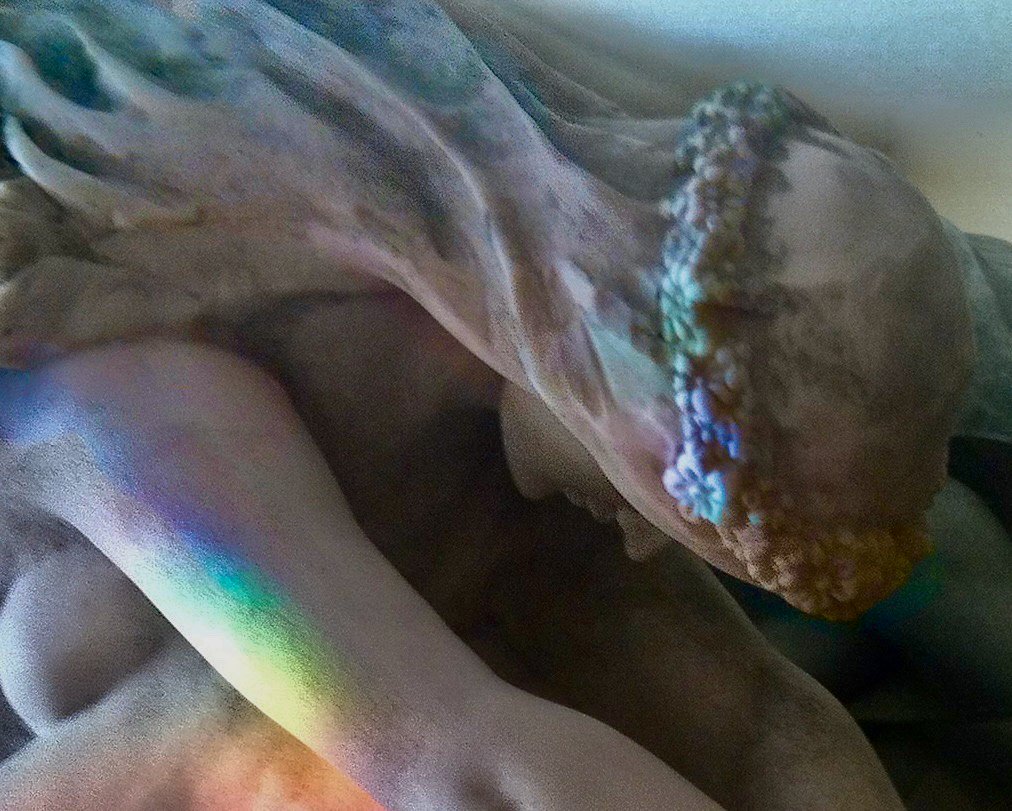
The banshee is wailing. And she is wailing for you.
All of us hear her. Most of us walk faster, away from her calling.
We turn up the noise. We tell ourselves it's not the right time, the right room, the right version of ourselves that gets to speak. I have spent decades sitting with clients who did exactly that — and I have done it myself.
I know what it costs.
The banshee is wailing because she has seen what is coming. The words women, Black, female, minority, tribal, Native American, elderly, disability, racism, antiracist, LGBTQ are among many that are disappearing — from institutions, from policy, from the language of rooms that built entire missions around saying them. The banshee knows what history has always known: when our words disappear, it is not long before our bodies follow.
In darkness, she stands at the water's edge.
You hear her before you see her. With a sound that moves through the body, she speaks a warning of imminent grief — and something older, rising from the throat of a woman who will not be quiet.
Every culture in human history has known her.
Every culture has also tried to silence her.
We are still trying.
The Banshee Has Many Names
Across cultures, continents, and centuries, she has been known.
In Ireland, she is the Bean Síhe — wailing in the dark before death arrives. She is not the cause of what is coming. She is the one faithful enough to announce it.
In Scotland, she is the Bean Nighe — at the river's edge before dawn, washing the clothes of those about to die. She is there so you do not face what is coming alone.
Across Latin America, she is La Llorona — the Weeping Woman — crying for what has been lost. Some losses cannot be outrun. They must be faced.
Across every ocean, every century, every culture that has not yet had its stories stolen — it is a woman's voice, an anticipatory cry that will not stop. And not one of these traditions calls her evil.
Every single one says the same thing:
She is unheard.
What We Are Doing Now
I have sat with so many clients who were told, in a thousand different ways, that their voice was too much. Too emotional. Too direct. Too soft. Too loud. Too political. Too uncomfortable. Just — too.
I have watched them edit themselves into something smaller. Swallow their knowing. Resort to performing a version of themselves that would finally be acceptable. Wait for the right moment, the right room, the right amount of permission to say the true thing.
That moment rarely came.
So their voice went underground. It became anxiety. Exhaustion. The specific grief of someone who has stopped trusting what they know.
This is not ancient history. It's happening now.
Our voices are being told, again, that they are too much — or more precisely, that they do not exist at all. It's happening both loudly and quietly, dismissively, one word at a time.
It is the oldest erasure, wearing new clothes.
Don't buy it.
What Silence Costs
When you cannot name a thing, you cannot see it. When you cannot see it, it compounds — quietly, in the margins, in everything that is no longer being said out loud.
The banshee has never been the problem. What she is announcing has always been the problem.
And the longer we silence the messenger, the louder the message becomes — not as sound, but as consequence. In the leadership tables where women are still underrepresented. In the decisions made about women's bodies, women's safety, women's futures — and the futures of Black and Brown communities, Indigenous peoples, people with disabilities, LGBTQ+ lives, the elderly, the immigrant, the poor — everyone whose existence has been quietly removed from the language of institutions that once claimed to serve them.
She is warning us that the tides have shifted. Our grandmothers, mothers, sisters, and daughters. Our Black and Brown kin, our Indigenous elders, our LGBTQ+ family, our disabled beloveds, our immigrant neighbors — every voice that has ever been told it does not belong. All of us. At risk.
Will you answer the cry of the banshee and reclaim your voice and your power?
If ever there was a time — this is it.
The banshee is patient. She will wait at the water's edge for as long as it takes.
But I want to ask you something she has been asking all along: What would change if you stopped running — and started listening? What if you turn to face the tide, claim your voice and power, and act on behalf of what moves through you? Because the voice you've been fleeing is not your enemy. It is the most faithful thing about you.
What Becomes Possible When You Listen
What becomes possible when you stop running?
Not a return to who you were before you went quiet. Something more — a voice seasoned by everything you've endured. A knowing that has survived the silencing. Power that doesn't require you to perform or shrink or wait for permission.
I have watched clients reclaim this. Not in a single moment of revelation, but in the quiet decision to stop editing themselves. To speak their truth and to trust what they know even when the world around them is working hard to make them doubt it.
That reclaiming is the work I do — and I want to do it with you.
Peace, Power, and Prosperity — No Matter What
A FREE, ONLINE WEBINAR | May 4, 6:30 PM ET
One evening. Real teaching. A practice you can use immediately. An honest conversation about what it means to stop running from the intrinsic power of your voice — and start living from it.
The banshee is not here to haunt you; she is here to call you home.
With you in this, Tammy
