The Monk and The Addict: Two Alters. One Question.
Every day I stand before the lump of clay that is my life.
Like my body, it's a bit lopsided: Too much here, too little there. It's not very graceful and certainly not what I imagined as a child.
Areas collapsing under the weight of disappointment; places that hardened when they could have remained soft, these are the places I ignored for years, or where I worked far too hard to perfect.
So I go to work, pressing, pinching, smoothing. Adding a little here, carving away a little there. Trying to make something of myself. Trying to become wiser, more disciplined, more successful, more patient, more spiritual, more “enough.”
Some days my life cooperates. Other days, like clay, it collapses in on itself. A carefully shaped wall sags, a beautiful edge cracks, and something I thought I had finally mastered slips through my fingers—again.
Still, I return. Hands in the clay. Day after day. Year after year. Because that's what disciplined people do, right? They keep shaping, fixing, improving.
They keep trying to become who they think they're supposed to be.
Yet when I stop pinching, pressing, and smoothing, and look closely, beneath the lumps and bumps, there is something beautiful emerging. It only took me sixty-five years of presence and practice to notice.
Some days I see immense creative possibility. Other days, when I'm tired and cranky, all I see is a mess.
Yet every morning, there it is. Waiting. Not for judgment. Not for criticism. Not for another grand plan. Only for my hands, my next choice, and for the presence and touch of the sculptor.
For most of my life, I understood discipline as something I should, ought to, and needed to do. It felt like a debt to pay, a daily battle and reckoning between who I was and who I thought I should be. Living between the life I wanted and the life I kept settling for, discipline tasted like restriction. Like gritting my teeth and forcing myself forward because the alternative was to admit defeat. Some days it still feels that way.
But over the years I've been learning something different. Discipline isn't just a behavior—it's an active declaration of what you love. It’s love made visible.
That perspective changed everything. Because devotion is not merely what we feel. It is what we repeatedly give ourselves to. It is what receives our attention, our energy, our time, our life. And whether we realize it or not, devotion is always shaping us.
For years I believed I was shaping that clay—molding and improving it, trying to turn it into someone worthy, successful, and wise. Someone who was enough. Every new habit was another attempt to smooth out a rough edge, fill a crack, or reshape some part of myself that seemed inadequate.
Most of us were taught that discipline meant fixing ourselves. Nobody told us we might be excavating something whole.
Age has taught me something different. Or perhaps I should say, age has made me question the material I thought I was working with.
For most of my life, I thought I was standing before clay—shaping, correcting, improving, trying to become something or someone.
But what if I misunderstood the assignment? What if my life was never clay to begin with? What if it was marble? And what if all these years discipline wasn't shaping me into who I should become, but was slowly revealing who I had been from the beginning?
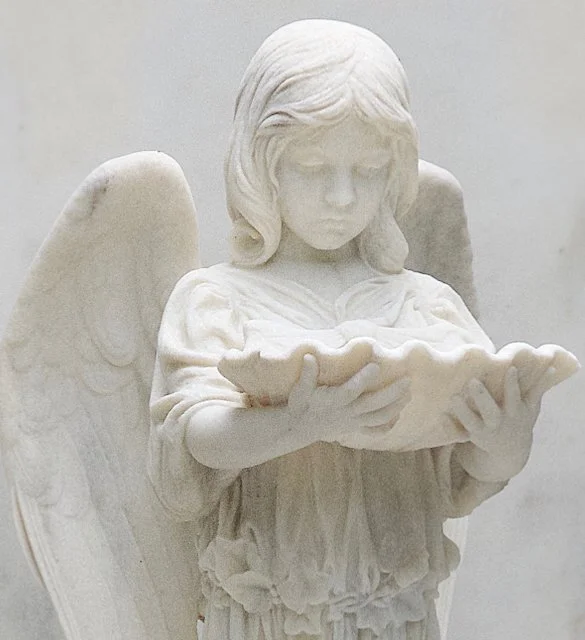
Standing before a block of marble, the sculptor doesn't create the figure. She uncovers it. With each strike of the chisel, something falls away. A little more stone. A little more illusion. A little more of what never belonged.
The work is not adding. The work is removing.
One strike and almost nothing changes. A thousand strikes reveal everything.
Every act of showing up is also an act of clearing away. Your life works the same way. Getting out of a warm bed when the morning air is cold. Taking the walk. Writing the page. Closing the refrigerator door. Making the difficult phone call. Keeping your word long after the excitement has faded. Each of those acts is removing something—the cold morning air removes comfort as excuse, making the difficult call removes avoidance, keeping your word removes the story that you can't be trusted. The doing is the removing.
These moments seem small and insignificant — as though nothing is happening. But something is. Every choice clears away a little more of what obscures your essential nature. The fear. The avoidance. The self-deception.
It's not because discipline builds who you are. It's because devotion reveals what you are.
The marathon runner is disciplined. The entrepreneur is disciplined. The monk is disciplined. The addict is disciplined.The person scrolling through three hours of outrage and distraction is disciplined, too.
The question was never whether you're disciplined. The question is, beneath the discipline, what sits at the center of your devotion?
What story? What fear? What desire? What wound? What God?
Which is why the monk and the addict have more in common than we might like to admit. The difference is not discipline. The difference is devotion.
Both return to the altar every day. Both sacrifice. Both practice. Both become what they repeatedly serve. The monk is shaped by what enlarges life. The addict is shaped by what diminishes it. Neither lacks devotion.
The tragedy isn't a lack of devotion. It's misplaced devotion.
Some devotion heals you. Other devotion hollows you out. This is why it matters not merely that you are devoted—it matters where your devotion is placed. One reveals freedom. The other reinforces captivity.
In our own way, we are all monks and addicts. We are all kneeling before something. Serving something. Giving our lives to something.
The question is whether what we serve enlarges our lives or diminishes them.
And if enough stone is cleared away, something unexpected appears. Not a better version of you. Not a perfected version of you. The one who was there before the fear, before the performance, before the endless self-improvement. The real you.
The light you were always carrying. Not built, earned, or achieved. Revealed.
One devoted act at a time.
The marble is waiting.
